



Fostering research culture among academic scholars worldwide
The IRC provides a platform for emerging and advanced researchers to showcase their research writing skills.
Accepting submissions until May 15, 2027.
About the competition
The International Research Competition (IRC) is an epitome of the organization’s commitment to knowledge and research. True to its mission, IIARI upholds the value of research and education for intellectual growth and development. IRC aims to nurture research culture among academics in various disciplines.
IRC is an international competition open to all student and professional researchers across the globe. It brings forth a venue for emerging and advanced researchers to display their research writing prowess.
1. Objectives
The competition aims to:
- continuously develop strong research culture;
- provide platform for the dissemination and publication of research outputs;
- foster collaboration among researchers around the globe; and
- develop camaraderie among fellows in the industry and academic community.
2. Division
The competition is divided into two divisions:
Division 1. Student Division (Emerging Researchers). This competition is open to high school and undergraduate students of any level and specialization.
Division 2. Professional Division (Advanced Researchers). This competition is open to postgraduate students, teachers, faculty members, industry researchers, practitioners, and professional researchers in any fields and specializations.
3. Categories
IRC has two categories in each division.
Category 1: Social Science and Applied Research
This category includes studies that primarily describe, assess, analyze, compare, or explain phenomena using qualitative, quantitative, or mixed-method approaches. This can include surveys, assessments, interviews, case studies, correlational studies, experimental assessments, and other empirical studies where the principal output is knowledge or findings, rather than a developed product.
Category 2: Science, Technology and Developmental Research
This category includes studies that involve the design, development, creation, testing, or validation of a tangible or functional output, particularly in Science, Information Technology, Engineering, and related fields. Outputs may include software, applications, systems, prototypes, devices, models, technological solutions, algorithms, or other developed products.
ROUNDS OF THE COMPETITION (3Es)
EVALUATION
The competition begins with the submission of the full manuscript in the prescribed format (download the title page and download the anonymous file). A three-member panel of judges evaluates each paper based on its technical content, methodological rigour, empirical findings, and overall contribution to the field. A paper must receive at least two “ACCEPT” votes to qualify for the next round of the competition. Only qualified participants will receive a notice of acceptance via email.
Qualifiers must register for the competition and submit the required supporting documents, including proof of eligibility (a student ID or proof of enrolment for Division 1, or an employee ID or certificate of employment for Division 2), the registration fee of $40 (₱2,000 for competitors from the Philippines), and authorization from the school for teachers submitting student research.
All accepted papers will be published in the journal.
ELIMINATION
The IRC is authorized by the University of Queensland to conduct the Three Minute Thesis (3MT) competition. In the elimination round, finalists will deliver a live, three-minute presentation of their research. The presentation is evaluated based on the following:
Comprehension and content. The presentation provides clear motivation, background, and significance to the research question, clearly describes the research strategy/design and the results/findings of the research and clearly describes the conclusions, outcomes, and impact of the research.
Engagement and communication. The oration is delivered clearly, and the language is appropriate for a non-specialist audience. The PowerPoint slide is well-defined and enhances the presentation. The presenter conveys enthusiasm for their research and captures and maintaines the audience’s attention.
The winners of the 3MT will be given a special award. The top 10 competitors will advance to the final round.
EXHIBITION
The grand finalists will showcase their research through a research presentation and a panel interview.
Research presentation. The grand finalists will present their research within 5 to 10 minutes. A three-member panel of jurors will evaluate each finalist's presentation based on the technical depth and content of the research, as well as its practical utility and potential contribution to the relevant field. Each member of the jury shall be provided with a full copy of the finalist's research paper for review and reference during the presentation.
Interview. Following the research presentation, each finalist will answer three to five common questions prepared by the organizers and administered consistently to all finalists. The finalists will be evaluated based on the clarity and depth of their responses, as well as their ability to communicate ideas effectively.
The total scores will determine the finalists' overall placement in the competition.
Important due dates
Evaluation Round
May 15, 2027 - Full paper submission deadline.
May 31, 2027 – Announcement of Finalists.
June 1-15, 2027 – Preparation for elimination round.
Elimination & Exhibition Rounds
June 18, 2027 – 3MT competition
June 19, 2027 – Announcement of grand finalists
July 24, 2027 – Final Round & Hybrid Awarding Ceremony
Rules and mechanics
1. Scope of research
There are four key areas: (1) education; (2) business, tourism and health management; (3) social sciences; and (4) science and technology. The competition accepts any topic within its scope and coverage. The submitted article needs to have strong empirical evidence and make significant contribution to the field. It should have strong theoretical and/or methodological literature. The submission is an original article, not have been nor considered for publishing elsewhere. The author must obtain permission for any used copyrighted materials within the article. The competition only accepts articles in English.
The paper submitted for the competition must not have been previously published. Authors may submit their theses or dissertations, provided these have not been published as journal articles or other formal publications, or submit newly written research papers.
The total word count including references for Division 1 must be 5,000 to 6,000. Meanwhile, Division 2 requires 6,000 to 8,000 words including references.
2. Eligibility
Division 1 is open to currently enrolled or newly graduated high school and undergraduate (university, college and technical/vocational) students only. Authors need to provide valid identification, proof of their enrollment or certificate of graduation. In case of a team, all the authors must be currently enrolled or newly graduated during the academic year at the time of the competition. The authors are allowed to have mentors or advisers as co-authors. Clearly specify in the manuscript if adviser.
Division 2 is open to all researchers from academic institutions and industry. Authors must provide valid identification or proof of employment. For those engaged in freelance work or private practice, proof of professional status must be submitted, such as a company registration certificate, certification from a relevant professional body or a graduation certificate in a specialized field.
Teachers or research advisers may use their students' theses or dissertations for the competition, provided they submit a certification from the school's Research Office or an authorized school official confirming permission to use the research for competition purposes. The student researchers must be included as co-authors of the submitted paper to ensure proper acknowledgment of their contributions.
3. Accepted papers
All accepted papers will be published in The Research Probe or in other relevant IIARI journals. Should an author decide to withdraw from the competition after their paper has been accepted, a written notice must be submitted to the competition committee at least seven (7) days before the scheduled elimination or final round.
4. Selection criteria
During the Evaluation Round, the three-member jury will vote "ACCEPT" or "REJECT" based on the following:
- Background and related work
- Methodology
- Results and Discussion
- Conclusion
During the Elimination round of the competition, the criteria for the selection of the grand finalists include:
- Presentation provided clear motivation, background, and significance to the research question. (5 points)
- Presentation clearly described the research strategy/design and the results/findings of the research. (5 points)
- Presentation clearly described the conclusions, outcomes, and impact of the research. (5 points)
- The oration was delivered clearly, and the language was appropriate for a non-specialist audience. (5 points)
- The PowerPoint slide was well-defined and enhanced the presentation. (5 points)
- The presenter conveyed enthusiasm for their research and captured and maintained the audience’s attention. (5 points)
During the Exhibition round of the competition, the criteria for the selection of the grand winners include:
- Research Content and Technical Depth - 40%
- Relevance, Significance, and Practical Utility - 30%
- Presentation Quality and Organization - 20%
- Technical Knowledge and Understanding - 10%

Prizes and awards
Two grand winners will be announced in each division and category. Each winner will receive the following prizes:
Division 1 – Student Division (Emerging Researchers)
- Category 1: Social Science and Applied Research - P7000, Certificate and Plaque
- Category 2: Science, Technology and Developmental Research - P9,000, Certificate and Plaque
Division 2 – Professional Division (Advanced Researchers)
- Category 1: Social Science and Applied Research - P8000, Certificate and Plaque
- Category 2: Science, Technology and Developmental Research - P10,000, Certificate and Plaque
The second and third placers in each category receive certificate and medal. The winning advisor/mentor also receives certificate. The non-winners receive e-certificate of recognition.
Frequently Asked Questions
A: The registration fee is $40 (P2,000) for accepted papers.
No. The competition requires full paper at the time of submission.
A: Yes. You may withdraw your paper after acceptance after a written notice to the competition committee at least seven (7) days before the scheduled evaluation.
If you register to the competition, you will automatically receive certificate of recognition (as finalist), certificate of publication (proceedings journal), certificate of presentation (conference) and certificate of training (conference).
Yes. All papers within the competition scope and coverage can be submitted.
Yes. You may submit previously conducted studies provided it was not published.
All authors should appear in the competition except for the advisor or mentor when included as co-author. The team can also decide on an official competitor/s to appear in the competition.
For further queries, you can send email to irc@iiari.org or send WhatsApp message to (+63) 916 387 3537.
Only high school and undergraduate students who graduate during the academic year in which the competition is held are eligible to participate. For example, for the 2027 competition, only graduates from the 2026–2027 academic year (Batch 2027) are eligible.
Yes. Teachers or research advisers may submit their students’ theses or dissertations for the competition, provided they obtain certification from the school’s Research Office or an authorized school official confirming permission to use the research. The student researchers must be included as co-authors of the submitted paper to ensure proper acknowledgment of their contributions.
Committee Members

Hiranya Dissanayake
Chairman

Melissa S. Carbonell
Co-chairman
Evaluators

Dr. Baniline Jone Abantao
Philippines

Roopa T
India

Dr. Maria Christina F. Bagundol
Philippines
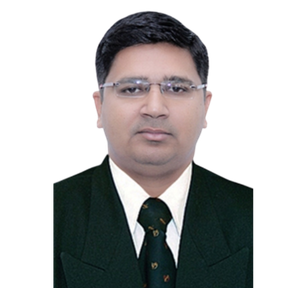
Dr. Ritesh Amarsela
India

Dr. Eduardo R. Yu II
Philippines

Shane C. Briones
Philippines

Jowie G. Espaldon
Philippines

Dr. Mohammad Aatif
Saudi Arabia
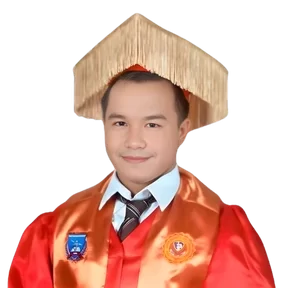
Joemarie A. Pono
Philippines

Tanjil Ahmed
Bangladesh

Dr. Richard Brian B. Tutor
Philippines

Engr. Ronel D. Paglomutan
Philippines
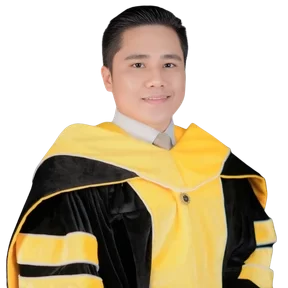
Dr. Christian Anthony R. Flores
Philippines
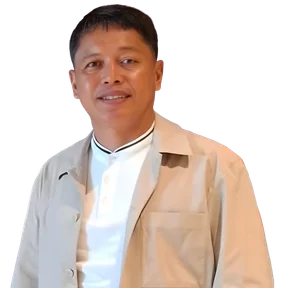
Dr. Roleen B. Moleño
Philippines