



General Guidelines
Publication Thrusts and General Guidelines
The Institute publishes books written in English and Filipino in any fields or focus. The main thrusts of the institute include education, business and management, accounting and finance, humanities and social sciences, science and technology, engineering and mathematics and information technology. Inter-disciplinary topics are also encouraged. The Institute accepts textbooks, electronic books, monographs, edited collection and children’s books. There is no required book template. The authors are highly encouraged to be innovative, creative and bold in writing and formatting their book. Think outside the box and be non-conventional.
The Institute accepts manuscripts within the standard 80,000 words. Depending on the nature of the book and the topic, shorter or longer than the required number of words can still be accepted. For instance, printed textbooks can require longer than the standard number of words than the literary book.
It is the prime responsibility of the author to ensure that the quality is highly acceptable as to content, use of language, grammar and punctuations. The institute has the right to reject any book proposal or book chapter not within the required standards for publication. The book can be rejected even at the first stage of the submission.
The authors can submit either already completed manuscript or book proposal. Completed manuscript goes to the normal publication process. Meanwhile, book proposal (book draft or incomplete manuscript) is also encouraged. The author receives comments and suggestions at the internal review process. The complete manuscript must be submitted and accepted before the external review.
The manuscript must include pertinent information of the author/s including name/s, affiliation/s, address and email address. The corresponding author, in case of multiple authors, must be properly indicated.
Publication Process
The two files must be uploaded through the online submission portal. Your manuscript will be assigned Submission ID Number which you will use for all the communications related to the publication. Upon submission, you will receive submission confirmation acknowledgement approximately within 24 hours.
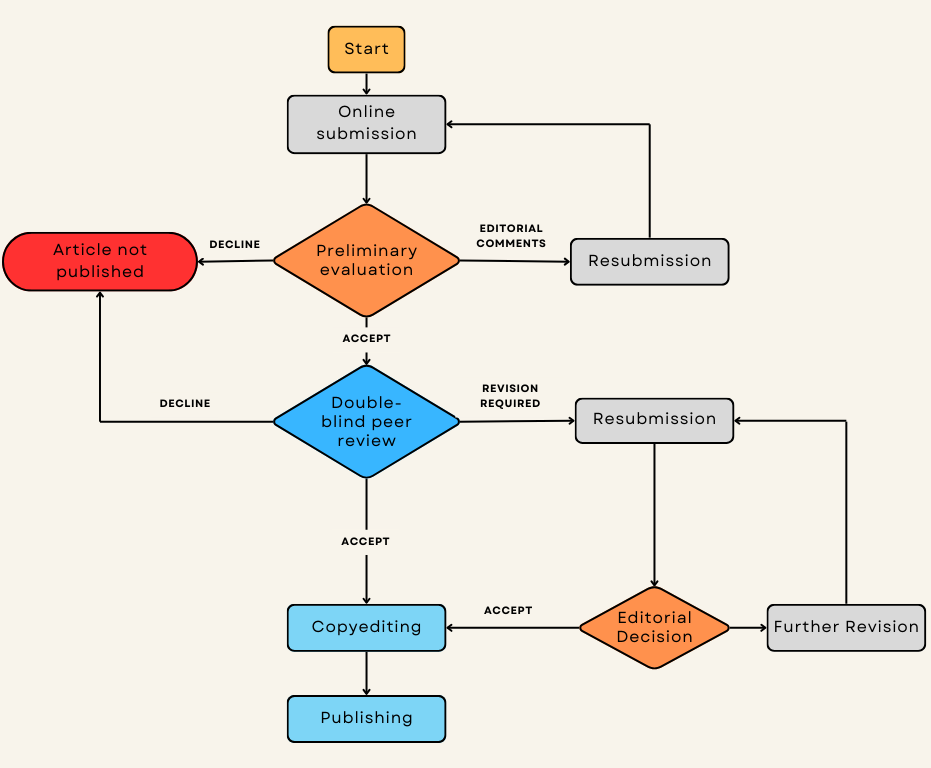
The publication process and timeline is shown below:
| Process | Description | Timeline |
| Online submission | The author submits the manuscript through the online submission portal. | |
| Internal Review |
Monograph. The director for media and publication evaluates the submission as to its fitness to the thrust and standard of the Institute, formatting requirements and readiness for review and publication. Book chapter. The assigned book editor evaluates the submission as to its fitness to the content of the book, formatting requirements and readiness for review and publication. The editor accepts or rejects the submission. |
Monograph - 4 weeks Book chapter - 2 weeks |
| External review |
Upon acceptance by the internal reviewers, editorial assistant calls for external reviewers. Monograph. The reviewers are given one week for acceptance of the review assignment and five weeks for the review proper. Book chapter. The reviewers are given one week for acceptance of the review assignment and three weeks for the review proper. |
Monograph - 6 weeks Book chapter - 4 weeks |
| Revision & Resubmission |
Upon receipt of at least two most appropriate reviews, the comments of the reviewers are sent to the author through email. The author revises the manuscript according to the suggestions given.The resubmission must highlight the changes done within the revised paper and/or provide a discussion forum in the online submission portal. The revised paper must be uploaded in the same submission section as 'revision' file. |
4 weeks with extension as per author request |
| Publication acceptance | The director for publication and/or advirory board member evaluate the paper as to its readiness for publication. The editorial assistant proofreads the manuscript as per the comments given by the reviewers. |
Monograph - 2 weeks Book chapter - 1 week |
| Payment | Upon acceptance for publication, the author pays the book processing charge. | |
| Copyediting & Formatting | The paper is sent to the copyeditor for final formatting. At this stage, the author may still need to address some reviewer comments not properly followed. The copyeditor ensures that the book is structurally fit for international readership. |
Monograph - 2 weeks Book chapter - 1 week |
| Book Publication | The final draft copy of the book is sent to the author for confirmation. If the author finds necessary corrections, it should be communicated to the editorial assistant through email. The book publishing agreement is signed upon confirmation of the final copy. |
You can download the step-by-step process of manuscript submission and resubmission here.
Book Processing Charges (BPC)
The Institute collects a Book Publishing Charge (BPC) from authors. The current rates are as follows: $250 for open-access eBooks and $50 for open-access eBook chapters. The BPC covers the assignment of a DOI, indexing in various databases, submission to Google Books, and distribution across multiple academic websites and social networks. For book chapters, the BPC covers inclusion in the edited collection, which also has a DOI and is indexed in the same databases. As the publication is open access and not for sale, authors do not receive royalties.
Manuscript Submission Overview
Checklist Before Submission
Upon submission of the manuscript, the author warrants the following:
- the Work is not in the public domain;
- the Author is the sole proprietor of the work and has full power and authority, free of any rights of any nature whatsoever by any other person;
- the Work has not heretofore been published, in whole or in part, in any form;
- the Work does not, and if published will not, infringe upon any copyright, trademark, or any other intellectual property rights or other proprietary rights of any third party;
- the Work contains no matter whatsoever that is obscene, libelous, violative of any third party’s right of privacy or publicity, or otherwise in contravention of law or the right of any third party;
- all statements of fact in the Work are true and are based on diligent research;
- all advice and instruction in the Work is safe and sound, and is not negligent or defective in any manner;
- the Work, if biographical or “as told to” the Author, is authentic and accurate.
Manuscript Type
The Institute publishes books written in English and Filipino in any fields or focus. The main thrusts of the institute include education, business and management, accounting and finance, humanities and social sciences, science and technology, engineering and mathematics and information technology. Inter-disciplinary topics are also encouraged. The Institute accepts textbooks, electronic books, monographs, edited collection and children’s books.
Manuscript Format
Books. The author can submit either already completed manuscript or book proposal. The manuscript must include pertinent information of the author/s including name/s, affiliation/s, address and email address. The corresponding author, in case of multiple authors, must be properly indicated.
The online submission requires only MS Word file. There should be two files uploaded.
| FILE NUMBER | FILE TYPE | DESCRIPTION |
|---|---|---|
| 1 | Anonymous Manuscript file | This file is used for the review process. This full manuscript must not include the name and affiliation of the author/s. Any information related to the identity of the author/s must not be included within the full text. |
| 2 | Manuscript Title page | This file should contain the book title, preface and profile of the author. |
Although there is prescribed template, the author is given manuscript structural flexibility. However, the book should contain the following parts:
- Title Page – this is the cover page of the book.
- Author profile – should be in paragraph format with photograph.
- Preface – should detail the purpose and salient contents of the book.
- Table of contents - should contain chronological list of important themes per chapter.
- Book chapters –it should contain the following:
- Introduction
- Thematic discussions
- References
- Glossary of terms (if applicable)
- Appendices
- Bibliography
Book Chapter. The author can submit already papers as part of an edited book collection. The author should format the paper depending on the prescribed requirement of the book. However, the book chapter of an edited collection is generally formatted as IMRAD (for research articles) or thematic style (for literature review and other articles). Hence, the format of the chapter depends on: 1) book requirement; 2) style of the author; and 3) requirement of the topic/article.
The online submission requires only MS Word file. There should be two files uploaded.
| FILE NUMBER | FILE TYPE | DESCRIPTION |
|---|---|---|
| 1 | Anonymous Book Chapter | This file is used for the review process. This book chapter must not include the name and affiliation of the author/s. Any information related to the identity of the author/s must not be included within the full text. |
| 2 | Book Chapter Title page | This file should contain the title of the paper and profile of the author. |
Evaluation & Review of Manuscripts
The institute adheres to rigid evaluation and review process. As the institute is dedicated to the publication of quality educational materials worldwide, all submissions are subjected to evaluation and review.
Preliminary evaluation by the director and editors (internal review). The manuscript is sent directly to the publication director for preliminary evaluation. The director evaluates the proposal based on its fitness to the thrust of the institute. If the paper is accepted, it is sent to two (2) editors for preliminary review. The decision is any of the following: accept, revision or reject. If the manuscript is accepted, it is sent to the external reviewers for detailed evaluation. If the manuscript requires revision, the comments and suggestions are communicated to the author. The author revises the manuscript and submits the revised version before sending to the external reviewers. If the manuscript is rejected, the author receives the detailed reason/s for rejection. The decision to accept or reject the book is communicated to the author through email. The internal review takes two to six weeks.
External review. The institute adheres to double-blind external review. The anonymous manuscript file is sent to external reviewers composed of university professors and industry practitioners for their comments and feedback on the book. The institute ensures that external reviewers strictly comply with the ethical policy and standards. The result is sent to the author as soon as two reviews are done. The decision of the external reviewers may be any of the following:
- Accept. The manuscript is accepted without revisions. The author is advised to pay the fees prior and sign the book publishing agreement.
- Revision. The manuscript is accepted either with minor or major revision. The paper is sent back to the author for the corrections. The author is given ample time to comply depending on the severity of the corrections. If the time given is insufficient, the author is advised to formally request extension through email. The author then submits the corrected manuscript for final evaluation by the editors. If the manuscript is accepted, the author is advised to pay the fees and sign the book publishing agreement.
- Reject. The manuscript is rejected for publication. The author receives the detailed reason/s for rejection.
The external review takes one month to maximum three months.
Selection of Reviewers
Recruitment of advisory board and reviewers. The Institute recruits experts in the field to assist in the evaluation and acceptance of manuscripts. They are selected based on their qualification and specialization. The normal cycle for the selection of the new advisory board and reviewers is the first and last quarter of the year. Moreover, reviewers may express their intention to review manuscript upon registration in the submission portal (tick 'Yes, I would like to be contacted with requests to review submissions to this press'). All recognized advisory board and reviewers receive certificate of recognition.
Selection of reviewers for manuscript review. All advisory board and external reviewers must sign up to the online submission portal. This facilitates the submission, review and acceptance of all manuscripts. All the advisory board and the external reviewers are considered for the evaluation and the review of any manuscript based on their expertise. The reviewers consist of advisory board member and external reviewer. The editorial assistant randomly selects reviewers based on their specialization and interests.
Acceptance of the review. Selected reviewers can either accept or reject any invitation for review. The reviewers are given maximum of one week to accept the review task. The review itself is within a period of five weeks. Any reviewer can also ignore the invite if he/she is not confident to accept the task.
Review Process
All submitted manuscripts duly accepted are sent to the reviewers. The editorial staff reserve the right to choose the appropriate reviewer based on their knowledge of the topic. The reviewers normally are composed of advisory board member and external reviewer.
The journal adheres to the double blind peer-review process. Neither the author nor the reviewers know each other’s identity. Invitations are sent to potential reviewers. Thereafter, the manuscript is sent only to those who agreed to accept the review invite.
Any submission goes for two evaluation and review process: a) internal review and b) external review. The director for publication and/or two advisory board members evaluate the manuscript based on its fitness to institutional thrust or structural requirements while the external reviewers give detailed comments on the paper based on the evaluation criteria.
The journal uses the OMP-PKP platform and workflow for the submission and review of manuscript. For guidance and assistance on the use of the portal, you can download the workflow guidelines here.
Review Results
Any manuscript must be accepted by the internal reviewers to continue with the publication process. The results of the two stages of review are as follow:
Preliminary evaluation by the director and editors (internal review). The decision is any of the following: accept, revision or reject.
- Accept. If the manuscript is accepted, it is sent to the external reviewers for detailed evaluation.
- Revision. If the manuscript requires revision, the comments and suggestions are communicated to the author. The author revises the manuscript and submits the revised version before sending to the external reviewers.
- Reject. If the manuscript is rejected, the author receives the detailed reason/s for rejection.
External review. The decision of the external reviewers may be any of the following:
- Accept. The manuscript is accepted without revisions. The author is advised to pay the fees prior and sign the book publishing agreement.
- Revision. The manuscript is accepted either with minor or major revision. The paper is sent back to the author for the corrections. The author is given ample time to comply depending on the severity of the corrections. If the time given is insufficient, the author is advised to formally request extension through email. The author then submits the corrected manuscript for final evaluation by the editors. If the manuscript is accepted, the author is advised to pay the fees and sign the book publishing agreement.
- Reject. If the manuscript is rejected, the author receives the detailed reason/s for rejection.
The entire review process takes minimum two months to maximum five months. However, it is highly dependent on various uncontrollable circumstances. The journal ensures adherence to the proper timeline which completes the submission to final publication acceptance within the maximum six months.
Benefits of Becoming a Reviewer
Advisory board and reviewer roles are on a voluntary basis. As such, no monetary compensation is given for the services. However, there are non-financial and other financial incentives including:
a. Discounts. Advisory board members and reviewers are granted fixed 20% discount on all fees related to journal and book publication, training and courses and other fees.
b. Certificate. All recognized advisory board and reviewers receive a certificate of recognition.
c. Outstanding Reviewer of the Year. All reviewers are eligible for the annual Outstanding Reviewer of the Year award. Details of the award can be found here.
Business Model
Our Business Model
IIARI publishes open access journal articles, eBook chapters and eBooks with Processing Charges and prints full copies of the journals through Print-on-Demand scheme. Depending on the type of publication, the institute charges specific fee inclusive of review and language editing, lay-outing and copyediting. As a non-stock, non-profit organization, the institute sustains its operation, activities, international events and competitions through the fees collected from the clients.
Publishing Revenues
Our main revenue comes from:
Article Processing Charge. We charge specific amount for publishing articles in the journal. The open access articles with DOI are readily available online in pdf format and indexed in DOAJ, among others.
Book Processing Charge. We charge specific amount for publishing eBooks and eBook chapters in edited collection. The open access eBooks with DOI are readily available online in pdf format and indexed in Google Books, among others.
Conference Registration Fee. We charge specific amount for research articles registered in our international conferences.
Sale of Printed Journals. We sell printed journals on a Print-on-Demand scheme.